How to Choose the Best Kilimanjaro Route for You
6 routes, 6 different experiences — find the perfect climb
6 routes, 6 different experiences — find the perfect climb
There is no single "best" Kilimanjaro route. The best route is the one that matches YOUR goals, fitness level, timeline, budget, and personality.
Some climbers want solitude and wilderness. Others want the social energy of a popular trail. Some have nine days to spare; others are squeezing the climb into a tight vacation window. Some are altitude-anxious first-timers; others are experienced mountaineers seeking a challenge.
Kilimanjaro offers six major routes, each with distinct characteristics—duration, difficulty, scenery, crowding, cost, and acclimatization profile. Your job is to understand the trade-offs and choose the route that maximizes your chances of success while delivering the experience you want.
This guide walks you through the decision framework, compares all six routes in detail, and helps you find your ideal match. By the end, you'll know exactly which route to book—and why. (Also see our detailed Machame vs Lemosho comparison for an in-depth look at the two most popular choices.)
Before diving into specific routes, let's establish the five key factors that should guide your decision:
Kilimanjaro routes range from 5 to 9 days. More days = better acclimatization = higher summit success rates. If you only have 5-6 days, your route options narrow to Marangu or Umbwe—both challenging due to rapid altitude gain. If you can afford 7-9 days, you unlock routes with dramatically better success rates.
Simple rule: Take the longest route you can afford (time and money). The extra days aren't "slower"—they're strategic acclimatization that turns a 65% summit chance into a 95% one. Learn exactly how your body adapts in our complete acclimatization guide.
Here's the counterintuitive truth: shorter routes require higher fitness because they compress the physical and altitude challenge into fewer days. Longer routes let you go slow and steady, reducing the cardio demands.
If you're extremely fit and accustomed to endurance challenges, you might handle a 6-day route. If you're moderately fit or new to multi-day trekking, choose an 8-9 day route that doesn't punish you for being human. Read our training guide for a structured 10-12 week preparation plan.
Fitness helps, but route choice matters more than your VO2 max. We've seen ultra-marathoners fail on 5-day routes and first-time hikers summit on 9-day routes. The real challenge is managing altitude, not raw fitness.
Kilimanjaro sees 35,000+ climbers annually. Most crowd onto two routes: Marangu and Machame. During peak season (July-September, January-February), you'll encounter hundreds of other climbers on these trails—conga lines, crowded campsites, less wilderness feel.
If you want solitude, choose Northern Circuit, Umbwe, or Lemosho. You'll still see other climbers, but far fewer. If you enjoy the social energy of a busy trail and don't mind company, Machame and Marangu deliver. Learn more about Machame vs Lemosho comparison.
All routes summit the same mountain, but they traverse different ecosystems and landscapes:
Some routes spend more time in certain zones. Northern Circuit and Lemosho offer the most scenery diversity. Marangu is scenic but covers less ground. Umbwe is steep and forest-heavy early on.
Route cost correlates with duration and remoteness:
The price difference reflects more days of food, accommodation, guide/porter wages, and park fees. Is the extra cost worth it? If it increases your summit odds from 65% to 95%, absolutely. Failing costs you the entire trip investment—plus airfare and vacation time. See our detailed cost breakdown for what's included and how to budget properly.
Here's a quick-start guide to narrow your options:
Now let's dive into each route in detail.
Here's the master comparison table. Use this to see all routes side-by-side:
| Route | Days | Elevation Gain | Success Rate | Crowding | Cost | Best For |
|---|---|---|---|---|---|---|
| Marangu | 5-6 | 5,895m | 65% | High | $1,400-1,800 | Shortest timeline |
| Machame | 6-7 | 5,895m | 85% | High | $1,600-2,000 | Popular, balanced |
| Lemosho | 7-9 | 5,895m | 90% | Low | $2,000-2,500 | First-timers, acclimatization |
| Rongai | 6 | 5,895m | 80% | Medium | $1,600-2,000 | Good alternative |
| Umbwe | 6 | 5,895m | 70% | Very Low | $1,600-2,000 | Challenge seekers |
| Northern Circuit | 9 | 5,895m | 95% | Very Low | $2,500-3,000 | Best success, most time |
Notice the pattern: longer routes = higher success rates. The extra days aren't wasted—they're strategic acclimatization that dramatically improves your odds. Now let's explore each route in depth.

Best for: Time-constrained climbers with excellent fitness who accept lower summit odds. People who prefer sleeping in huts over tents.
Worst for: First-timers, altitude-sensitive people, those seeking solitude or pristine wilderness.
Real talk: Marangu is popular because it's cheap and short—not because it's good. You'll either summit or struggle. Many climbers develop altitude sickness by day 3 and turn back at Gilman's Point (5,681m), just 200m shy of Uhuru Peak. The huts are basic dormitories, not luxury lodges. The same-path ascent/descent means you see the same scenery twice.
If you only have 5-6 days, Marangu is viable—but understand the trade-off. You're gambling on your body's ability to adapt rapidly to altitude. First-timers typically do better on longer routes.

Best for: Fit first-timers seeking a good balance of challenge, scenery, and success. People who want the "classic" Kilimanjaro experience.
Worst for: People avoiding crowds. Anyone uncomfortable with mild scrambling (Barranco Wall is exposed but not dangerous).
Why it's popular: Machame delivers everything people want: dramatic scenery (the Barranco Wall is Instagram gold), reasonable success rate (85% on 7-day), moderate challenge, and a sense of accomplishment. It's the Goldilocks route—not too easy, not too hard, just challenging enough to feel earned.
The downside? Popularity means conga lines on summit night and crowded campsites. If you don't mind company, Machame is excellent. If you crave wilderness, look elsewhere.

Best for: First-timers who want the highest success odds. People who value scenery and don't mind a slower pace. Anyone nervous about altitude.
Worst for: Budget-conscious climbers. People short on time (minimum 8 days recommended).
Unique feature: The Shira Plateau—a vast, remote alpine desert at 3,500-3,800m. You spend two nights here, giving your body extended time to acclimatize at mid-altitude before pushing higher. It's stunningly beautiful and far less crowded than Machame's campsites.
Lemosho's 8-day version is our most recommended route for first-timers. The success rate speaks for itself: 90% reach Uhuru Peak. The extra $400-800 compared to Marangu or Machame buys you dramatically better odds and a far more enjoyable experience. Choosing the right operator matters as much as choosing the right route.
Best for: People who want the Machame experience without the crowds. Good fitness, 6-day timeline, desire for a quieter trail.
Worst for: Altitude-nervous first-timers (better to take an 8-9 day route). People seeking the most dramatic scenery (Rongai is beautiful but less varied than Lemosho/Northern Circuit).
Why underrated: Rongai doesn't get the same marketing as Machame or Lemosho, but it's a solid route. The northern approach means drier conditions (good during wet season), fewer crowds, and a unique perspective on the mountain. The wildlife viewing is better early on—you might spot antelope or monkeys in the forest.
Rongai is a smart choice if you want 6 days, moderate difficulty, and fewer people. It's not the best acclimatization (that's Lemosho/Northern Circuit), but it's better than Marangu and quieter than Machame.

Best for: Experienced hikers seeking a challenge. Fitness enthusiasts who want to test themselves. Solitude seekers who don't mind risk.
Worst for: First-timers. Anyone prone to altitude sickness. Cautious climbers or those prioritizing summit success over challenge.
Real talk: Umbwe is beautiful and rewarding—but unforgiving. The first two days are brutally steep, gaining 1,200m and 1,000m respectively through dense, humid rainforest. You hit 3,900m by day 2, giving your body almost no time to adjust. If you're fit, experienced, and confident in your altitude tolerance, Umbwe offers a thrilling, uncrowded experience. If you're uncertain, choose a longer route.
Guides sometimes call Umbwe "the route for people who don't like people." You'll have campsites almost to yourself. The wilderness feel is unmatched. But the price is steep in every sense—physically and altitude-wise.
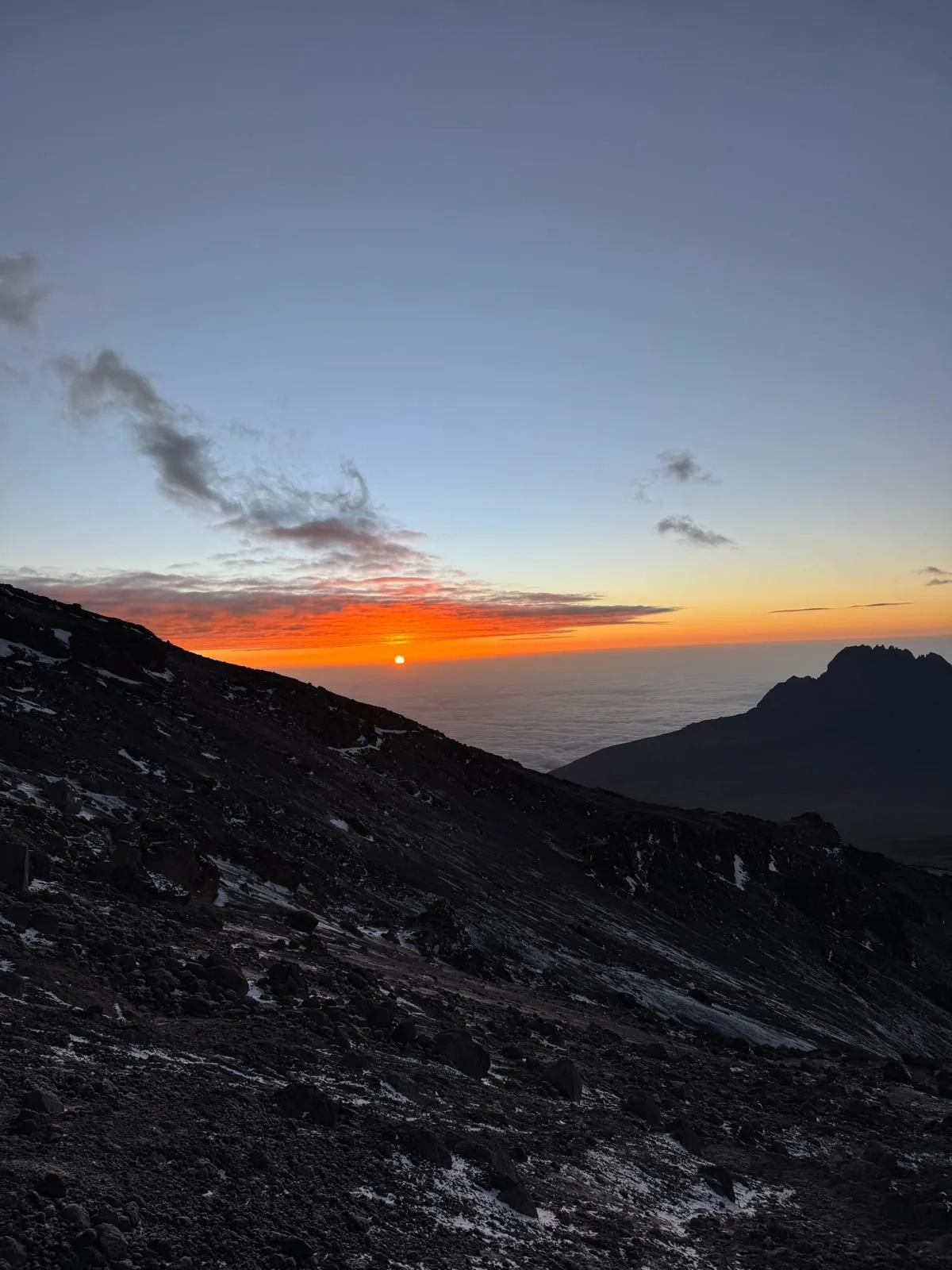
Best for: People with time who want the best possible summit odds. First-timers nervous about altitude. Solitude seekers. Anyone wanting the most comprehensive mountain experience.
Worst for: Time-constrained climbers (9 days minimum). Budget-conscious travelers (most expensive route).
Unique feature: The Northern Circuit is the only route that circumnavigates Kilimanjaro. You approach from the west (like Lemosho), then circle north around the mountain before summiting from the east. This gives you 360° views of the mountain, exposure to all ecosystems, and unparalleled acclimatization.
The success rate says it all: 95%+. Almost everyone who attempts the Northern Circuit reaches Uhuru Peak. Why? Because the route follows perfect "climb high, sleep low" principles across nine days. Your body has ample time to produce red blood cells, adjust breathing, and adapt to thin air.
The scenery is breathtaking—you camp on the Shira Plateau, traverse the northern slopes (almost no one goes here), see views toward Kenya, and summit from a unique angle. Wildlife is more common on the quieter northern flanks.
If you have 9 days and can afford $2,500-3,000, the Northern Circuit is hands-down the best route. It's not the easiest (that'd be Marangu with huts), but it's the smartest—maximum success, maximum scenery, maximum solitude.
→ Full Northern Circuit Route Guide
Still unsure which route to choose? Follow this decision tree:
If you would rather answer eight quick questions than trace a flowchart, the 2-minute Kilimanjaro route quiz weighs your fitness, dates, and priorities and points you at a route.
This flowchart prioritizes success rate and acclimatization—the two most important factors for first-timers. Experienced mountaineers can adjust based on personal preferences (challenge, solitude, scenery).
Different routes emphasize different ecosystems. Here's what each route offers:
Marangu: Straightforward progression through rainforest → moorland → alpine → summit. Misses the Shira Plateau and northern slopes. Least scenery diversity since you ascend and descend the same path.
Machame: Full spectrum of ecosystems. Highlights include the Shira Plateau approach and the iconic Barranco Wall—a fun scramble down a 300m rock face (not technical but memorable). Summit approach via Barafu Camp offers dramatic lunar landscapes.
Lemosho: Arguably the most scenic. Extended time on the Shira Plateau—a vast, high-altitude desert at 3,600-3,800m with 360° mountain views. Pristine rainforest approach. Less crowded, so scenery feels more wild.
Rongai: Drier northern forest (different vegetation than lush southern routes). Views toward Kenya. Less dramatic than Lemosho but unique. Good for wildlife early on.
Umbwe: Dense, steep rainforest (some of the most beautiful forest on the mountain—thick moss, giant ferns). Shortcut through ecosystems means less time in moorland. Joins Machame route partway up, so you get the Barranco Wall.
Northern Circuit: The complete package. You see everything: rainforest, Shira Plateau, alpine desert, northern slopes (almost no other routes go here), lunar summit landscapes, and views in every direction. Best wildlife viewing. Most photography opportunities.
Bottom line: For maximum scenery, choose Lemosho or Northern Circuit. For iconic moments (Barranco Wall), choose Machame or Umbwe. For efficiency over scenery, choose Marangu or Rongai.
Crowds matter more than people admit. Here's the reality during peak season (July-September, January-February):
Marangu: 500+ climbers per week. Huts sleep 60-120 people per night. Think hostel dormitory vibes. Summit night is a conga line of headlamps. If you want solitude, this isn't it.
Machame: 400+ climbers per week. Barranco Camp (the base of the famous wall) can feel like a tent city during peak season—hundreds of tents. Summit night traffic jams at narrow sections. Still beautiful, but crowded.
Lemosho: 100-150 climbers per week. Significantly quieter. You'll see other groups but won't feel overwhelmed. Campsites feel spacious.
Rongai: 80-100 climbers per week. Moderate crowds. Less known among international tourists, so quieter than Machame.
Umbwe: 30-50 climbers per week. Very quiet. You might go entire days seeing only your own group. Campsites often have just 2-3 groups total.
Northern Circuit: 20-30 climbers per week. Near-solitude. The northern camps are so remote you'll often camp alone or with one other group. The wilderness experience is unmatched.
Real talk: If you hate crowds, avoid Marangu and Machame during peak season. The experience suffers when you're hiking in a line of 50 people and camping in a sea of tents. Choose Lemosho, Northern Circuit, or Umbwe for genuine wilderness.
Off-season (March-May, November) reduces crowds on all routes by 50-70%. If you don't mind rain, wet season offers quieter trails and lower prices.
Here's the truth: don't confuse speed with fitness.
The fastest route (Marangu, 6 days) requires the highest cardio fitness because you're compressing the physical and altitude challenge into fewer days. The longest route (Northern Circuit, 9 days) requires endurance (mental stamina for 9 days of hiking) but not extreme cardio—you can go slow.
Most people can complete the Northern Circuit unfit but trained (meaning they've done multi-day hikes before, even if they're not marathon-fit). Very few unfit people can summit Marangu without suffering because there's no room for error.
Marangu: High cardio fitness, moderate endurance. You need strong lungs and heart to handle rapid altitude gain. If you can run 5K comfortably or hike 1,000m gain in 3-4 hours, you're probably okay. Less fit? Skip Marangu.
Machame: Moderate cardio, moderate endurance, leg strength (the Barranco Wall requires scrambling). Good all-around fitness. If you can hike 6-8 hours with a light pack, you're fine.
Lemosho: Low cardio, high endurance (mentally, 8 days is a commitment). Slow and steady wins. If you can walk all day at a gentle pace, you're suited for Lemosho. Perfect for people who aren't gym rats but have determination.
Rongai: Moderate cardio, moderate endurance. Similar to Machame but less intense. Decent baseline fitness required.
Umbwe: High cardio, moderate endurance, technical footwork (steep, uneven terrain). You need strong legs, good balance, and comfort with exposure. Not for beginners.
Northern Circuit: Low cardio (slow pace is fine), very high endurance (9 days of hiking requires mental stamina). If you can walk 5-6 hours per day for a week straight, you're ready. This route is about consistency, not speed.
Regardless of route, train for 8-12 weeks before your climb:
See our 12-week Kilimanjaro training plan for a detailed program.
Let's talk money. Kilimanjaro isn't cheap, but the costs are transparent if you know what to look for. Here's the full breakdown:
1. Duration: More days = more food, accommodations, guide/porter wages, and park fees. Each additional day adds roughly $150-250 to the total cost.
2. Group size: Larger groups share costs. A solo climber pays full price ($2,500-3,500 depending on route). Join a group of 4-6 and costs drop 20-30% per person.
3. Operator quality: Budget operators ($1,200-1,500) cut corners—underpaid porters, less experienced guides, lower-quality food/gear. Premium operators ($2,500-3,500) pay fair wages, provide better support, and have higher success rates. The difference matters.
4. Season: Peak season (July-September, January-February) is 10-15% more expensive due to demand. Shoulder/wet season offers discounts.
Here's the cost-benefit math:
A 5-day Marangu climb costs $1,600 with a 65% success rate. An 8-day Lemosho costs $2,200 with a 90% success rate. The Lemosho costs $600 more but increases your summit odds by 25%.
If you're flying from North America or Europe, you're already spending $1,000-2,000 on flights, $500-1,000 on gear, and a week of vacation time. Spending an extra $600 to actually summit—after investing $3,000+ total—makes financial and experiential sense.
Don't penny-wise, pound-foolish yourself. Choosing the cheapest route and failing wastes your entire investment. Choose the route that maximizes success.
See our transparent pricing page for exact costs and what's included.
The Northern Circuit is the easiest route because of its gradual pace and excellent acclimatization profile, with a 95% success rate. Lemosho (8-9 days) is second-easiest with 90% success. Don't confuse "easiest" with "shortest"—Marangu is the shortest but has the lowest success rate (65%) due to poor acclimatization.
Northern Circuit and Lemosho are the most scenic routes. Northern Circuit circles the entire mountain offering 360° views of all ecosystems. Lemosho features the stunning Shira Plateau and dramatic alpine desert landscapes. Both offer far more scenery diversity than shorter routes like Marangu.
The Northern Circuit has the best views because it's the only route that circles the entire mountain. You see rainforest, moorland, alpine desert, lunar landscapes, and views toward Kenya—all from different angles. Lemosho and Machame also offer spectacular views, especially of the Shira Plateau and Barranco Wall.
No. Once your climb begins, the route is locked in. All logistics—guides, porters, camping equipment, food, and park permits—are route-specific and pre-arranged. Choose your route carefully before booking.
The dry seasons (July-September and January-February) are best for all routes, offering clearer weather and better trail conditions. However, all routes are viable year-round. Wet seasons (March-May, November) mean more rain but also fewer crowds and lower prices.
It's technically possible to ascend one route and descend another (e.g., Lemosho up, Mweka down), but logistics become complicated. Most operators use standard route configurations. Stick to one complete route for simplicity and better acclimatization.
Professional guides recommend routes based on your fitness level, available time, altitude experience, and goals. First-timers typically get Lemosho or Northern Circuit recommendations. Experienced hikers with limited time might be directed to Machame. Budget-conscious climbers with good fitness might consider Rongai. Guides prioritize your success and safety over convenience.
Choose the Northern Circuit (9 days, 95% success rate) or Lemosho (8 days, 90% success rate). Both routes offer exceptional acclimatization through gradual ascent and "climb high, sleep low" profiles. The extra days give your body time to adapt, significantly reducing altitude sickness risk.
After comparing all six routes, here's our honest guidance:
For first-timers: Choose Lemosho (8 days) or Northern Circuit (9 days). The success rates (90-95%) speak for themselves. You're investing thousands of dollars and a week of your life—maximize your odds of actually summiting.
For experienced trekkers with limited time: Machame (7 days) offers the best balance of challenge, scenery, and success (85%) in a week.
For budget-conscious climbers: Rongai (6 days) provides better acclimatization than Marangu at a similar price, with fewer crowds.
For solitude seekers: Northern Circuit (20-30 climbers/week) or Umbwe (30-50/week if you're very fit).
For challenge-seekers: Umbwe—steep, direct, unforgiving. Only for experienced, fit climbers.
For "I only have 5 days": Marangu—but understand you're accepting a 65% success rate and high altitude sickness risk. Consider whether the time savings are worth potential failure.
The bottom line: there's no universally "best" route. The best route is the one aligned with your priorities. Prioritize success rate and acclimatization if you're a first-timer. Prioritize challenge if you're experienced. Prioritize solitude if crowds drain you. Prioritize cost if budget is tight—but not at the expense of success.
Read more detailed guides on specific routes, or contact us for personalized recommendations based on your situation.
Let's talk about your timeline, fitness, goals, and budget. We'll recommend the route that maximizes your success and delivers the experience you want.
Get Your Free Route Consultation