Our Story
One climb changed everything
One climb changed everything
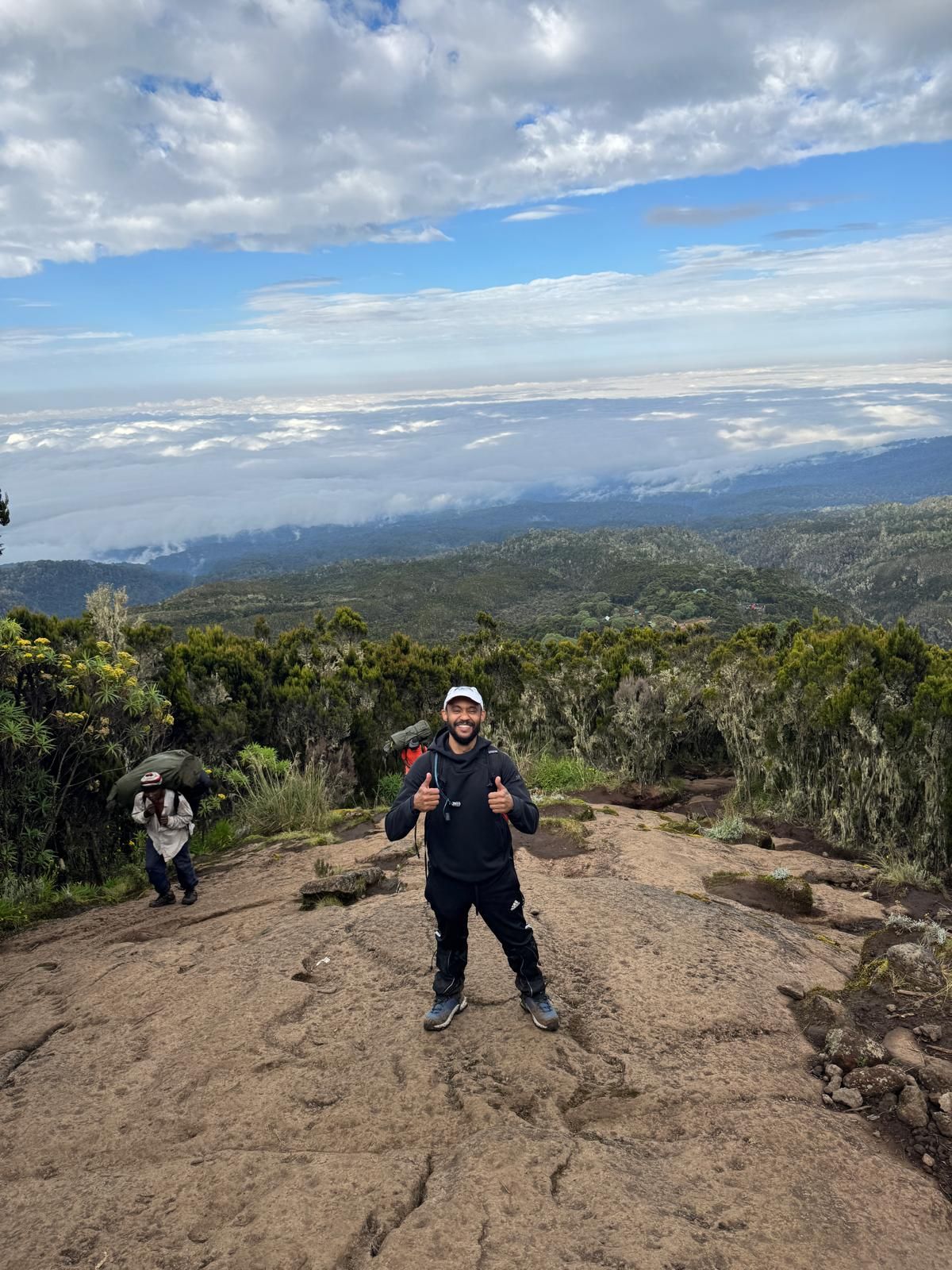
Above the clouds, somewhere around 3,500m. The porter behind me had been carrying 18kg since dawn — and still smiled wider than I did.
In early 2025, a friend told me I spent too much time behind screens. He wasn't wrong. I was running a tech business in Toronto, building automation workflows, shipping code — and I hadn't done anything that made my hands shake in years.
"Climb Kilimanjaro," he said. "You won't regret it."
I thought he was joking. I wasn't a climber. I'd never been to East Africa. But something about the idea stuck. Maybe it was the absurdity of it — a guy who optimizes software for a living, walking to the roof of Africa. I booked a flight to Tanzania before I could talk myself out of it.
July 2025. Machame Route. Seven days from gate to summit.
I won't pretend it was easy. The first two days felt manageable — rainforest, heather, the trail winding upward through green. By day three, the landscape turned alien. Giant Senecios towering through the mist like something from another planet. The air getting thinner with every step.
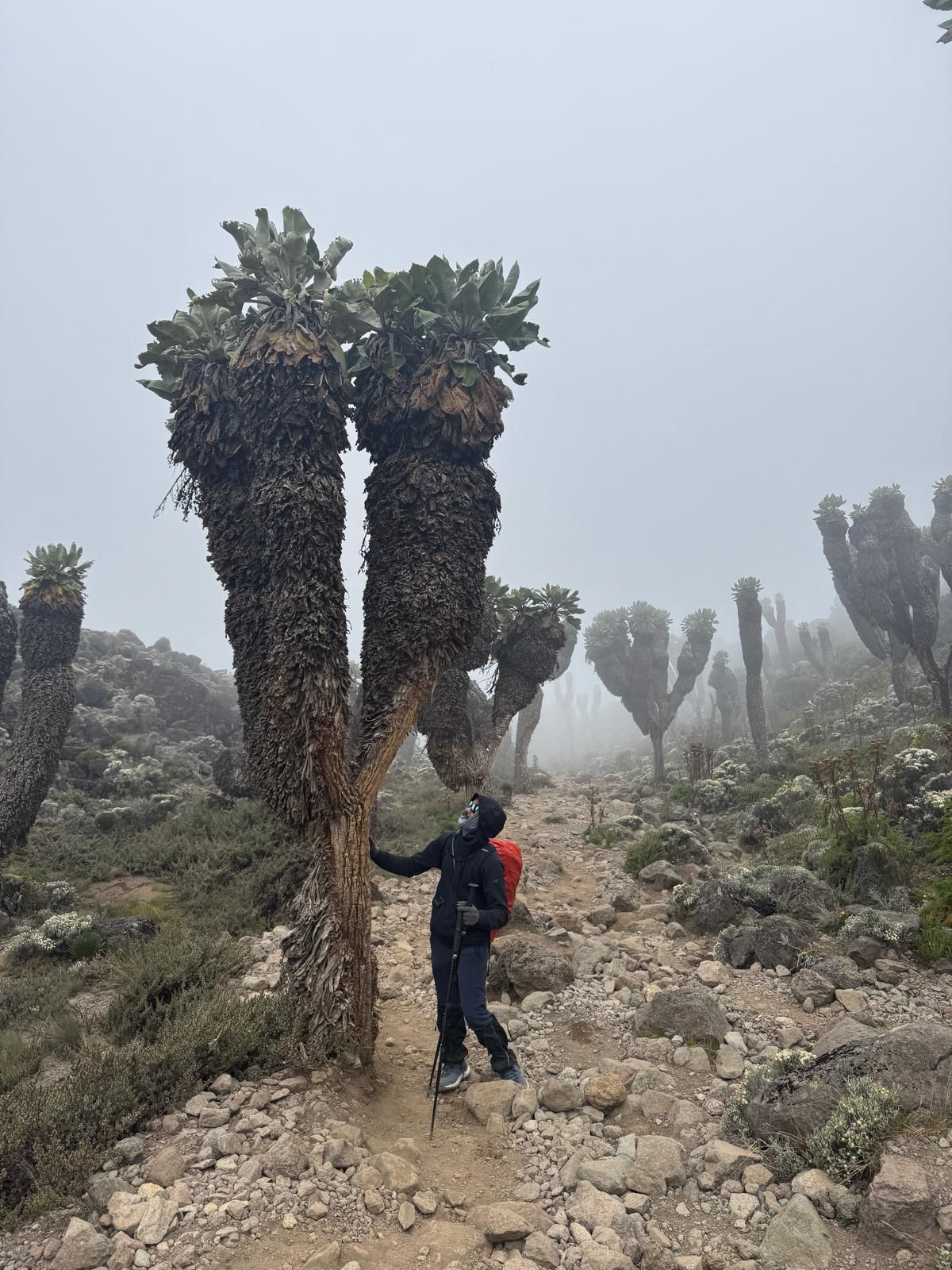
The Senecio forest in the moorland zone. These plants only grow on a handful of mountains in the world — and they look like they belong in a dream.
At Lava Tower — 4,600 meters — the headache hit. The guides, Demi and Koni, didn't rush me. "Pole pole," they said. Slowly, slowly. They checked my oxygen levels, handed me water, and told me stories about the mountain while my body adjusted.
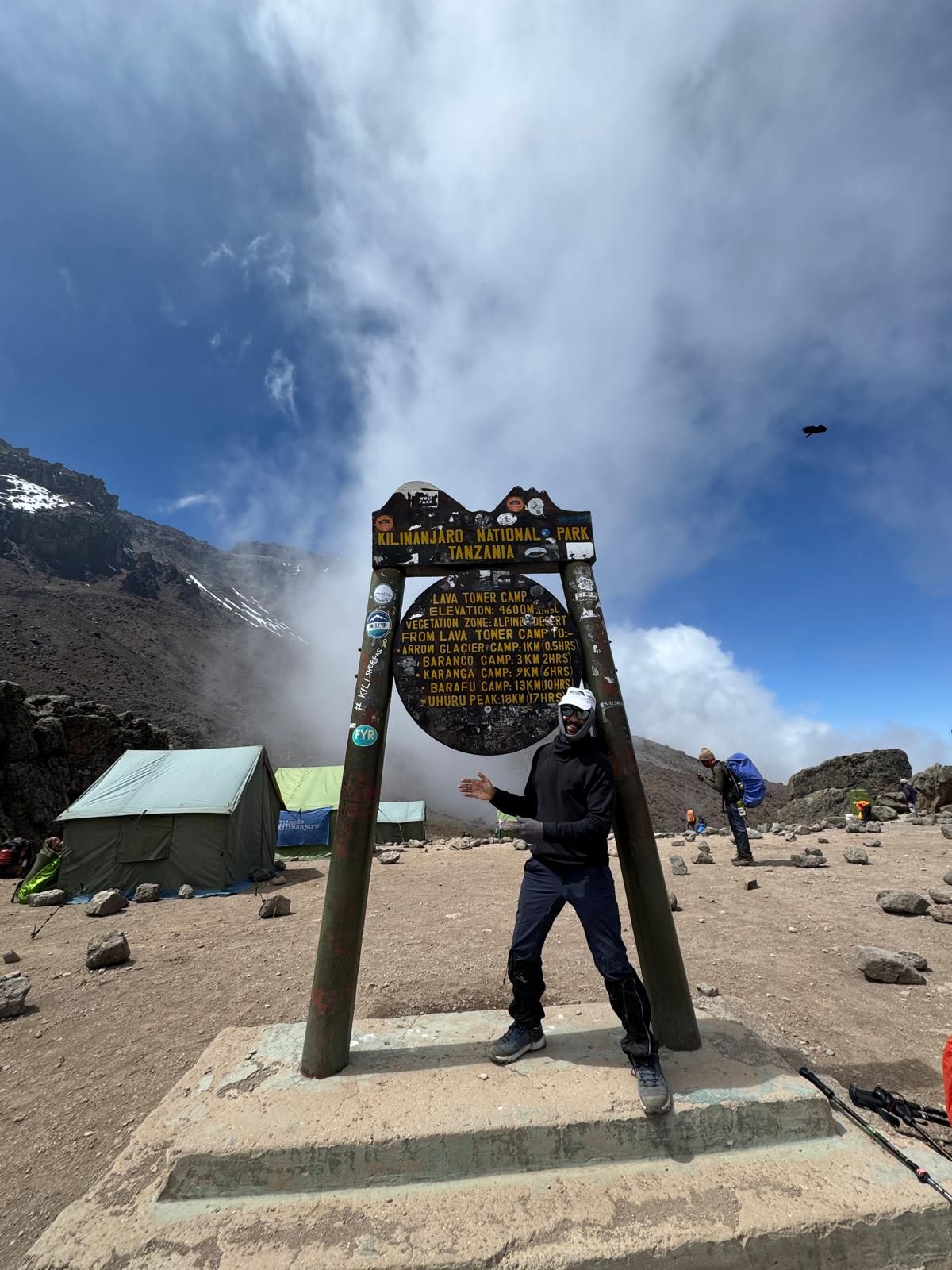
Lava Tower, 4,600m. The acclimatization point that separates tourists from summiteers. I felt terrible and alive at the same time.
We left Barafu Camp at midnight. Minus fifteen degrees. Headlamp on, one foot in front of the other, the stars impossibly bright above and the lights of Moshi impossibly far below.
There were moments I wanted to stop. Demi walked beside me the whole way. Not pushing, not pulling — just present. "You're doing well," he'd say. "The mountain isn't going anywhere. Neither are we."
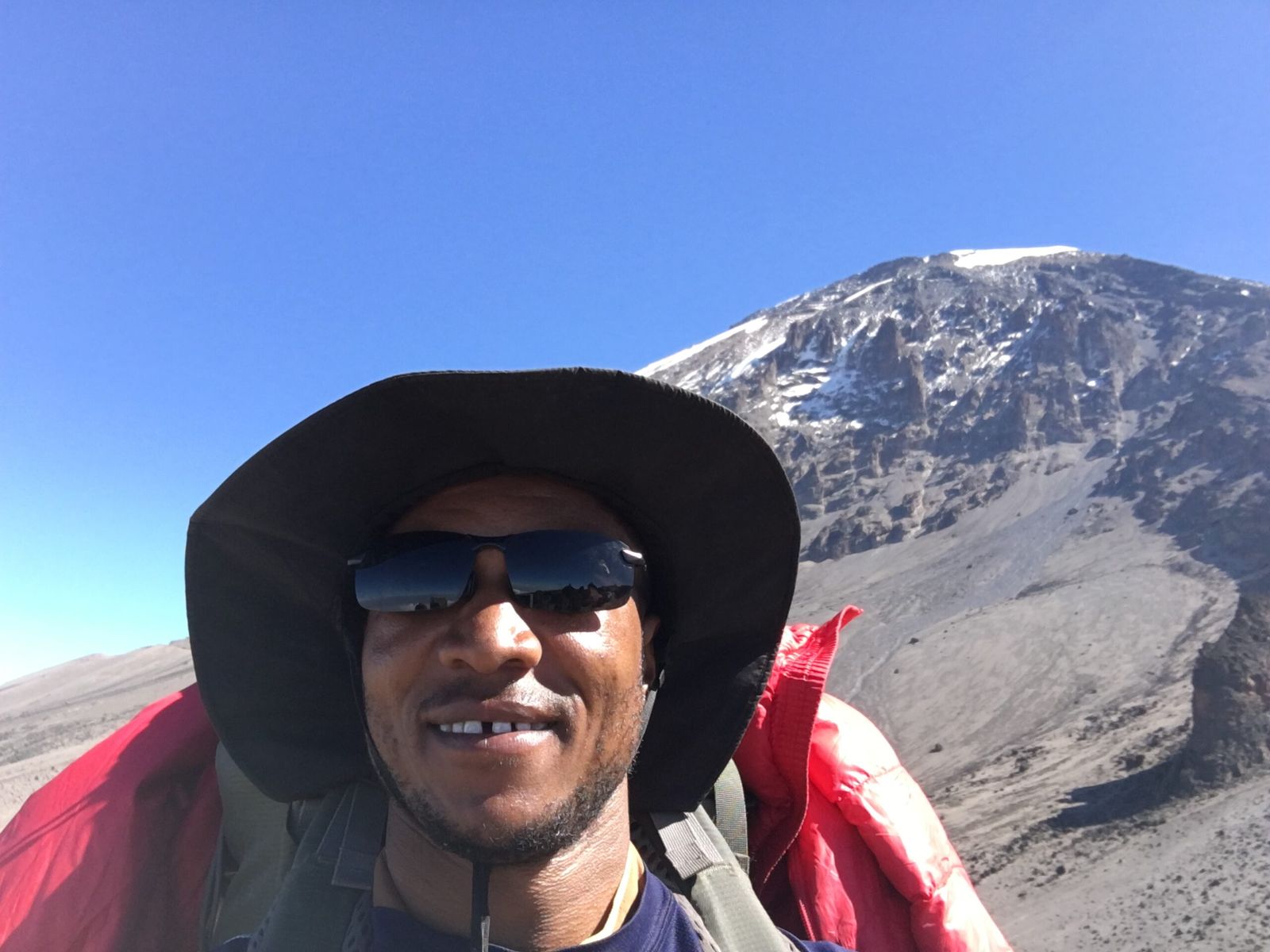
At 5:47 AM, the sun broke over the horizon. I was standing on volcanic scree at nearly 5,800 meters, watching the sky turn orange and gold over a sea of clouds. Mawenzi Peak was a black silhouette against the dawn.
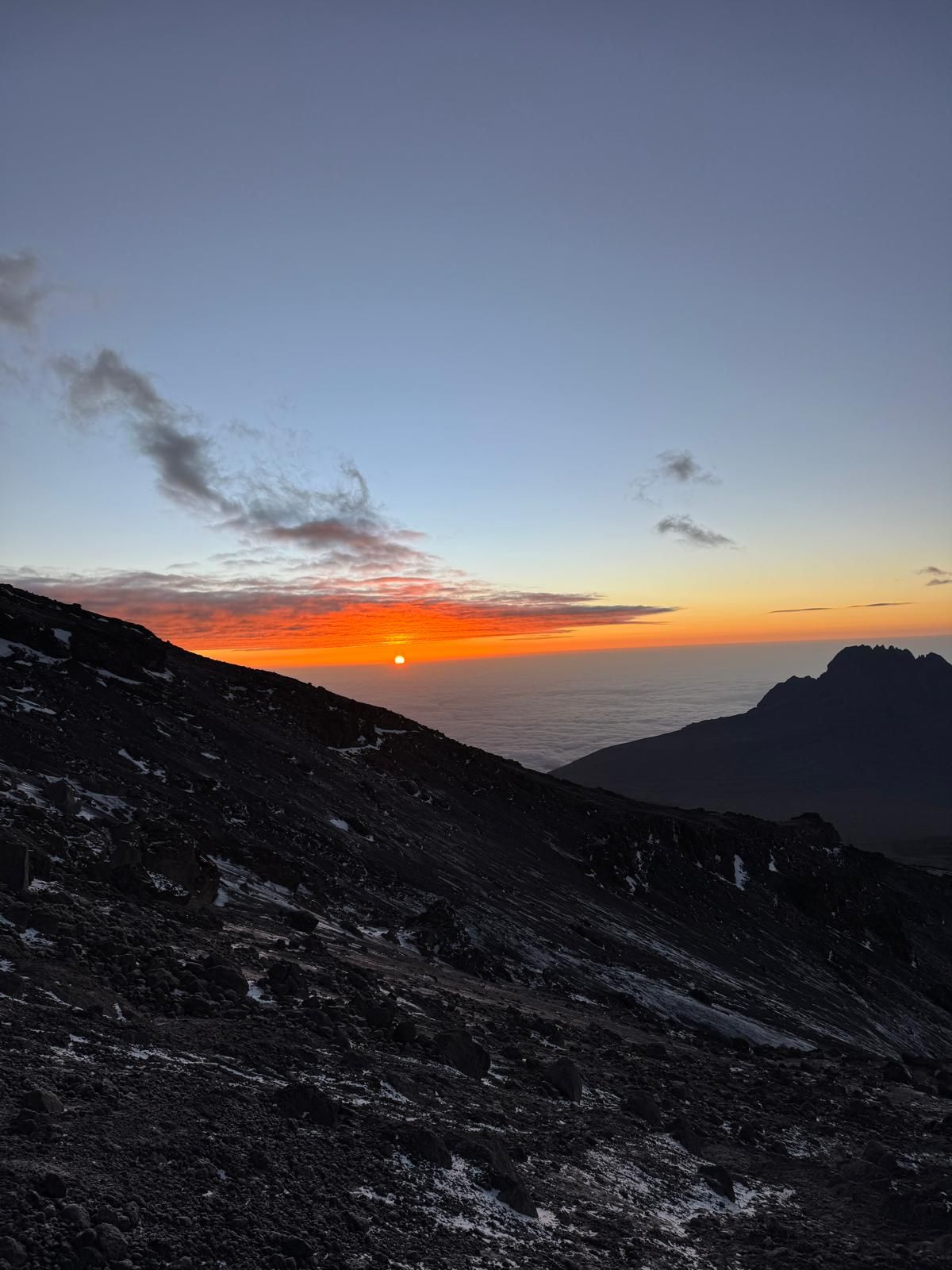
Sunrise on summit morning. No photograph does this justice. You have to be there, exhausted and freezing and completely alive, to understand what this moment feels like.
Forty-five minutes later, I touched the sign at Uhuru Peak. 5,895 meters. The highest point in Africa.
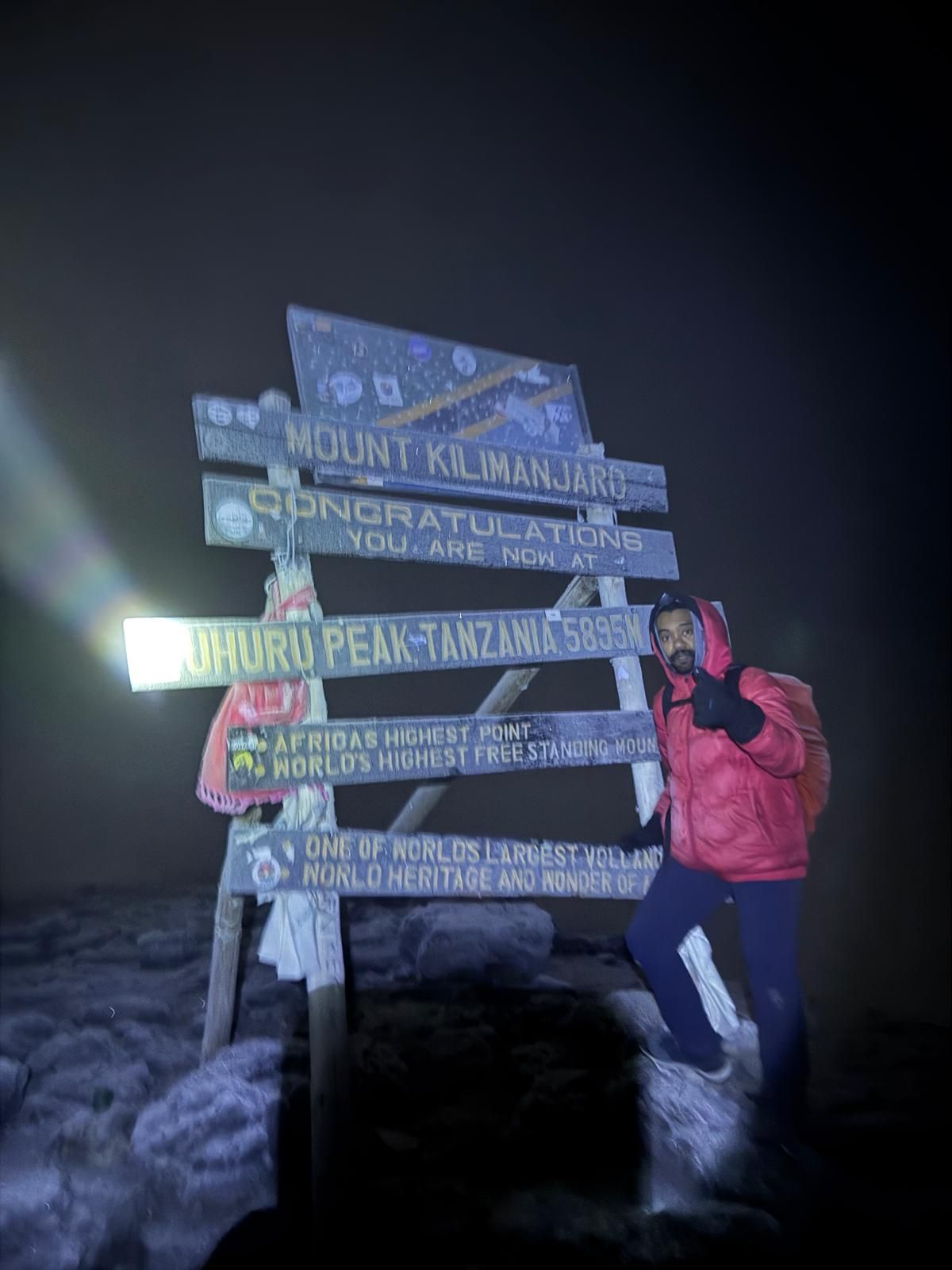
Uhuru Peak. 5,895m. Africa's highest point, the world's tallest free-standing mountain. I cried. I'm not embarrassed about that.
Here's the thing about Kilimanjaro that nobody tells you: the mountain is only half the experience. The other half is the people.
Demi has been guiding on Kilimanjaro for over 20 years. He grew up on its slopes, Chagga tribe, in the cultivated zone where the volcanic soil grows the best bananas in East Africa. He became a porter as a teenager and worked his way up to lead guide. He knows every rock, every weather pattern, every sign that altitude is about to become a problem.
Koni — quiet, methodical, always three steps ahead — organized the crew like a military operation. Every tent up before we arrived, every meal hot, every porter accounted for and carrying legal weight.
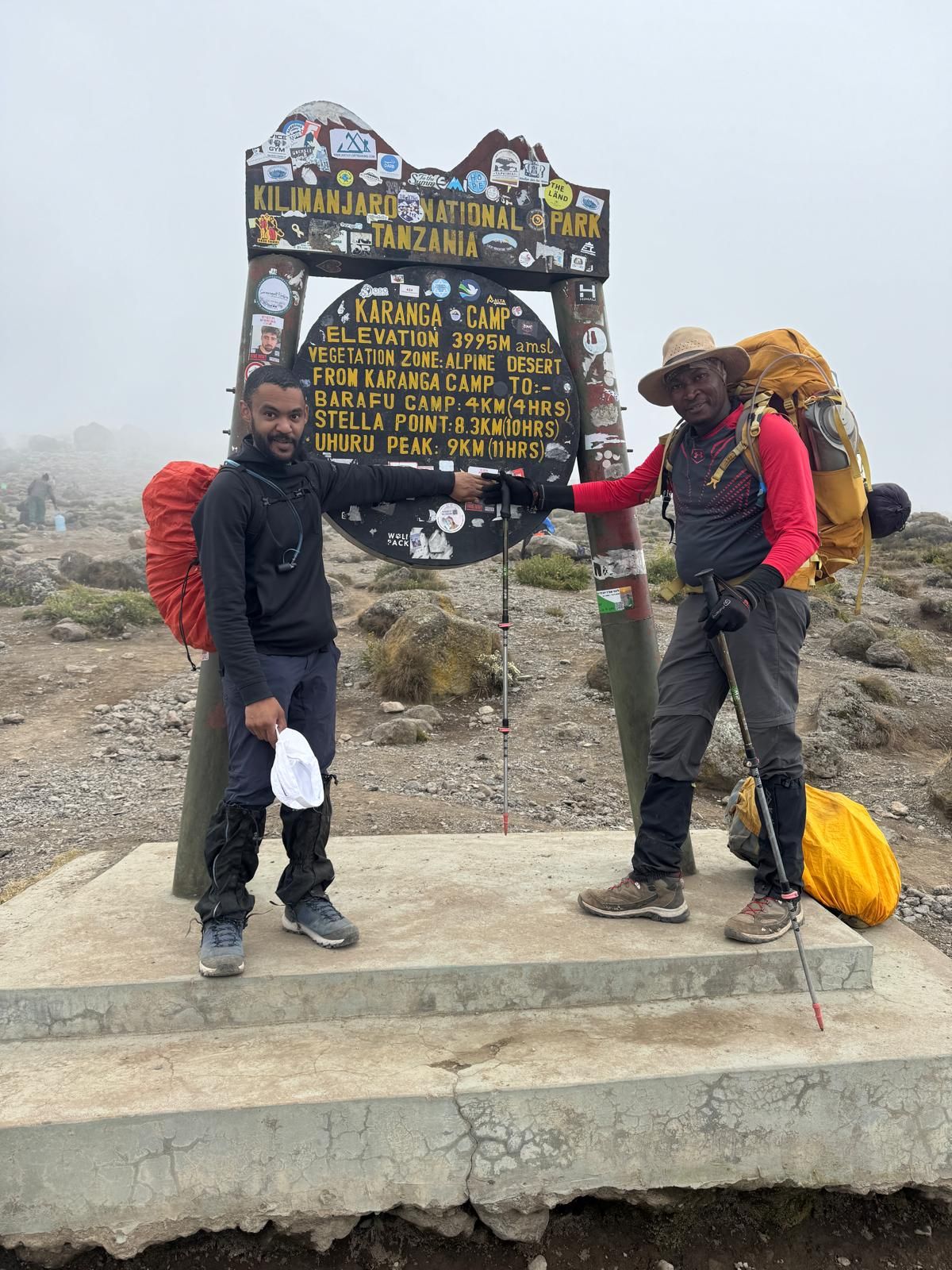
With Demi at Karanga Camp, 3,995m. By this point he'd already saved me from my own stubbornness twice. Behind us: four hours to Barafu, then the final push to the summit.
But on the descent, I started talking to other climbers. One group had paid $5,500 for a "luxury" experience that was identical to mine. Another had gone with a budget operator — $1,800 — and their porters were carrying 30kg loads in broken sandals. One climber told me he'd found three different prices for the same operator on three different booking sites, none of which matched what he actually paid.
The industry was broken. Great guides like Demi and Koni were doing world-class work, but the online experience of finding and booking them was a mess of inflated prices, fake reviews, hidden fees, and operators who treated porters like pack animals.
I came back to Toronto and couldn't stop thinking about it. I'm a builder — I solve problems with technology. And this was a problem I could solve.
What if there was an operator that:
I called Demi. Then I called Koni. I told them what I wanted to build. They said yes before I finished the sentence.
KiliPeak is the company I wish existed when I was planning my own climb. It combines what I know — technology, design, transparency — with what Demi and Koni know: the mountain. Twenty years of it.
We're not the biggest operator. We don't want to be. We want to be the most honest one. The one where you know exactly what you're paying for, who's guiding you, and that every person on your team is treated with dignity.
The mountain changed my life. We want it to change yours too.
— Ahmed
Founder, KiliPeak
The people who'll get you to the summit — and back down safely
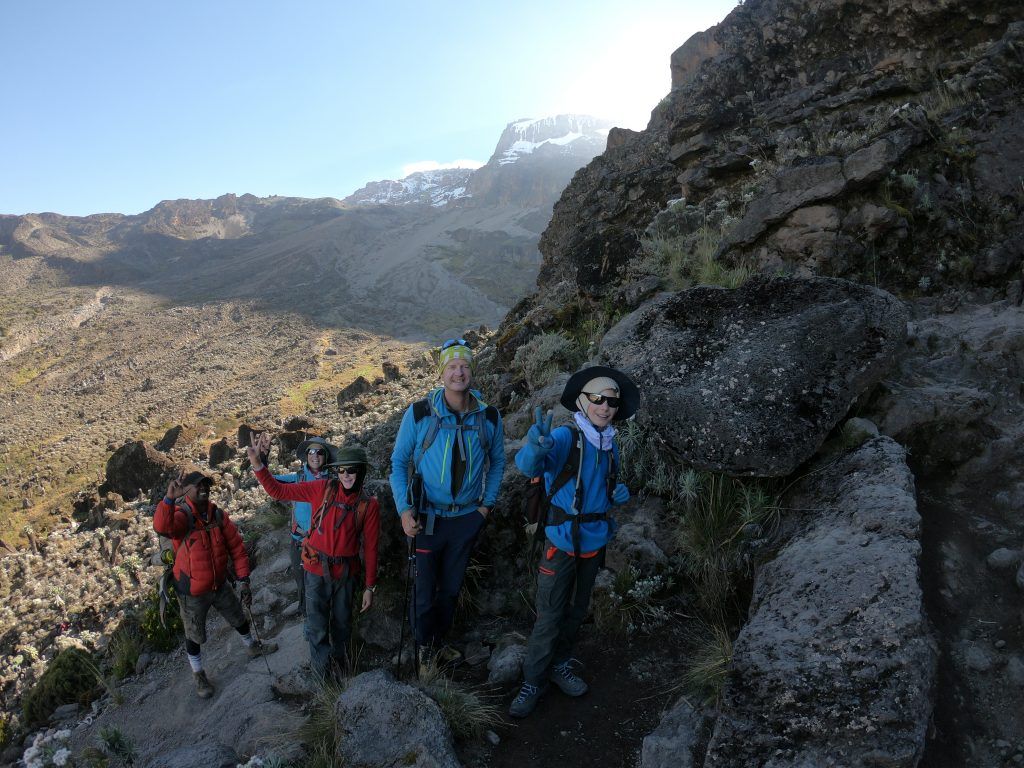
Our crew on the trail — guides, climbers, summit dreams.
The backbone of every summit deserves more than a thank-you
On my climb, I watched our porters carry heavy loads up steep trails, set up camp in freezing wind, and still find energy to sing on the descent. They made the whole thing possible. And I learned that at many operators, these same people earn $8-12 a day and carry dangerous overweight loads without proper gear.
Not here. Not ever.
$20+ per day minimum. Plus tips, meals, and accommodation on the mountain. Well above the industry average.
Maximum 20kg loads. We weigh packs before departure. No exceptions, no excuses.
Insulated jackets, waterproof pants, gloves, boots, and sleeping bags. No porter climbs in jeans and sneakers.
Medical insurance for all crew. Health checks before climbs. Same medical attention as clients.
Budget operators ($1,800-2,200) achieve low prices by underpaying porters and ignoring weight limits. We believe your summit shouldn't come at someone else's expense. When you tip your crew at the end, know they've already been treated fairly.
Contact us. You'll talk to real people who've actually been on the mountain — not a call center.
Response within 4 hours · No obligation · No sales pitch