
Kilimanjaro Honeymoon: The Ultimate Romantic Adventure Guide
Summit Africa's highest peak together — why climbing Kilimanjaro makes an unforgettable honeymoon
Summit Africa's highest peak together — why climbing Kilimanjaro makes an unforgettable honeymoon
Forget the beach resort. Forget the European city tour. What if your honeymoon was standing at 5,895 meters above sea level, watching the sun rise over Africa, holding hands with your partner after conquering the continent's highest peak together?
A Kilimanjaro honeymoon isn't for everyone. It's cold, challenging, and you'll spend a week without showers. But for adventurous couples who want to start their marriage with something truly meaningful, it's the experience of a lifetime. You'll bond through shared challenges, support each other through altitude headaches and exhaustion, and celebrate an achievement that 99% of honeymooners will never experience.
This comprehensive guide covers everything you need to plan the perfect Kilimanjaro honeymoon: choosing the right route, budgeting for the full trip, combining your climb with safari and Zanzibar beach, romantic touches to make it special, and honest advice about what to expect when you're dirty, tired, and in love at 4,000 meters.
Most couples choose beaches or cities for their honeymoon. There's nothing wrong with that — but there's also nothing extraordinary about it. A Kilimanjaro honeymoon offers something deeper: a shared challenge that creates the foundation for a strong marriage.
The symbolism is powerful. You're literally starting your marriage by achieving something incredible together. When you stand at Uhuru Peak holding a "Just Married" banner with your partner at sunrise, you're not just taking a photo — you're making a statement about the kind of life you'll build together. One based on adventure, mutual support, and pushing beyond comfort zones as a team.
Years from now, when you face challenges in your marriage (because every marriage has them), you'll remember: "We summited Kilimanjaro together. We can handle this."
According to Tanzania National Parks, approximately 35,000 people attempt Kilimanjaro each year. Of those, only about 15-20% are couples, and even fewer are honeymooners. Compare that to the millions of couples who honeymoon in the Caribbean, Hawaii, or Europe, and you realize how rare this experience is.
When you tell people "We climbed Kilimanjaro on our honeymoon," the conversation changes. You're not just another couple who went to Cancun — you're the couple with an epic story. Your honeymoon becomes a defining moment, not just a vacation.
Here's the truth about Kilimanjaro: it's hard. You'll be exhausted, you'll feel altitude sickness, and there will be moments when you question why you signed up for this. But here's the magic: you'll face all of it together.
When your partner is struggling at 4,500 meters and you help them keep going — or when you're the one struggling and they encourage you — you learn something profound about each other. You see your partner at their worst (exhausted, nauseous, maybe vomiting at altitude) and their best (pushing through impossible discomfort, refusing to quit, supporting you when they're also suffering). That kind of vulnerability and mutual support builds a deeper connection than any beach resort ever could.
Sarah and Mike, who climbed Lemosho for their honeymoon in July 2025, told us: "We got married in June and climbed Kili in July. Sarah had severe altitude sickness at Barranco Camp and seriously considered descending. Mike stayed up with her all night, held her while she threw up, and encouraged her to try one more day. She made it to the summit. We both say that night defined our marriage more than our wedding day. We learned we could face anything together."
One of the biggest misconceptions is that a Kilimanjaro honeymoon means sacrificing luxury and comfort for the entire trip. Not true. The smart approach is combining the climb with luxury before and after.
Imagine this itinerary: Two nights at a five-star safari lodge in Arusha (hot tub, gourmet meals, spa treatments). Eight days climbing Kilimanjaro (adventure, challenge, bonding). Four days on luxury safari (andBeyond tented camps, champagne sundowners, hot air balloon over the Serengeti). Seven days at a Zanzibar beach resort (private villa, couples' massages, snorkeling in crystal water). You get both the adventure and the pampering — just not simultaneously.
Let's be honest: visuals matter for honeymoons. Kilimanjaro delivers in spades. Summit photos with the Uhuru Peak sign at sunrise (golden light, glaciers, and you in all your gear looking like absolute adventurers). Starry night skies from high camp where the Milky Way is so bright you can read by it. Dramatic landscapes: rainforest, heather moorland, alpine desert, glaciers. Your honeymoon album will be stunning.
Compare that to the thousandth photo of someone in a swimsuit on a beach, and you realize: Kilimanjaro photos tell a story. They show courage, adventure, and achievement — not just relaxation.
Thirty years from now, when someone asks about your honeymoon, you'll have a story. Not "we went to a resort" but "we summited Kilimanjaro." You'll remember summit night — starting at midnight, hiking for seven hours in the darkness and cold, questioning everything, then reaching the top at sunrise and crying with joy and exhaustion. You'll remember the inside jokes, the moments of struggle, the triumph. Those memories become part of your identity as a couple.
Before you book flights and start training, let's have an honest conversation. A Kilimanjaro honeymoon is incredible — for the right couples. It's miserable for the wrong ones. Here's how to know which camp you're in.
Both partners enjoy hiking and outdoor adventure. Notice we said "both." If one of you loves the outdoors and the other tolerates it to make you happy, this honeymoon will breed resentment. You need two people who genuinely want this experience.
You want a meaningful, challenging experience, not just relaxation. Some couples need their honeymoon to be pure decompression after wedding stress. Others want their honeymoon to be transformative. If you're in the latter camp — if you value experiences over comfort — Kilimanjaro is perfect.
You're in good physical shape or willing to train. You don't need to be elite athletes, but you should both be active. If you hike regularly, do cardio, or play sports, you're probably fine. If you're sedentary and unwilling to train for 3-4 months, reconsider.
You value unique experiences over traditional luxury. There are no five-star hotels on Kilimanjaro. You sleep in tents, use basic toilets, and don't shower for a week. If you can handle that for the adventure payoff, you're golden. If the idea of a week without a hot shower makes you anxious, maybe not.
You're comfortable with basic accommodations on the mountain. Your "room" is a two-person tent. Your "bathroom" is a squat toilet or private toilet tent (better, but still basic). Meals are cooked by a camp chef and served in a mess tent on plastic plates. It's camping — elevated camping with porters carrying your gear and a cook preparing meals, but still camping.
You have 2-3 weeks for the full trip. A climb-only honeymoon takes 10-12 days (including travel and rest days). The full experience — climb plus safari and Zanzibar — takes 2.5-3 weeks. If you only have one week of vacation, this honeymoon doesn't fit.
One partner isn't physically active. This is the biggest red flag. If one of you is dragging the other along, the non-outdoorsy partner will be miserable, and the outdoorsy partner will feel guilty. That's not how you want to start a marriage.
Either of you has severe altitude sensitivity. Some people just don't acclimatize well. If you've tried high-altitude activities before (skiing above 3,000m, hiking in the Rockies or Alps) and suffered badly, Kilimanjaro might be risky. That said, most people do fine with proper acclimatization — read our comprehensive altitude sickness guide to understand symptoms and prevention strategies.
You prefer pure relaxation over challenge. If your ideal honeymoon is sleeping until noon, lounging by a pool, reading novels, and getting couples' massages daily, Kilimanjaro is not for you. There's no shame in that — know what you want.
Budget is tight. A Kilimanjaro honeymoon isn't cheap. Even budget versions run $8,000-10,000 total for two people (climb, flights, safari/beach). Luxury versions hit $20,000+. See our complete cost breakdown guide for itemized pricing on flights, permits, lodging, and add-ons. If that's a financial strain, there are cheaper ways to have an adventure honeymoon.
You need constant connectivity. There's no WiFi on Kilimanjaro. Cell service is spotty or nonexistent above 3,000 meters. If you can't handle being offline for a week, this will stress you out.
What if one partner desperately wants to climb Kilimanjaro and the other is hesitant? Here's a creative solution: One partner climbs, the other does safari, and you meet in Zanzibar after.
Example itinerary: Partner A climbs Kilimanjaro (8 days). Partner B does a luxury safari in Serengeti and Ngorongoro (5 days), then relaxes at an Arusha lodge for 3 days. You reunite in Zanzibar for a week of beach bliss together. Both get the experience they want, then you share the romantic beach portion as a couple.
This requires trust and independence, but it can work beautifully. Some couples even say the separation made the reunion in Zanzibar more special.
Let's address the elephant in the room: Do you need to be super fit to climb Kilimanjaro?
Short answer: No. You don't need to be athletes. But you should be active and willing to train.
Kilimanjaro is a "walk-up" mountain — no technical climbing, no ropes, just hiking. If you can hike for 5-7 hours a day with a daypack at a slow pace, you can summit. The challenge isn't fitness; it's altitude. Altitude doesn't care how fit you are. Marathon runners get altitude sickness. Sedentary people summit easily. It's physiological luck.
That said, being fit makes the experience more enjoyable. If you're huffing and puffing on day two at 3,000 meters, you'll struggle. If you're comfortable hiking uphill for hours, you'll have energy to enjoy the views, conversation with your partner, and the experience.
Our recommendation: Start training 3-4 months before your climb. Do weekend hikes together (date days!), cardio workouts, and strength training. Not only does this prepare your body, it also tests your partnership. If you can't handle a 4-hour training hike together without friction, you'll struggle on Kilimanjaro. Use training as a trial run for group dynamics.
For a complete training plan designed for couples, read our 12-week Kilimanjaro training guide.
Before you book, sit down with your partner and ask:
If you both answer yes to all of these, you're ready for a Kilimanjaro honeymoon. If there's hesitation, keep exploring options.
Honeymoon Insight: The couples who love their Kilimanjaro honeymoon are the ones where both partners wanted it equally. Don't climb Kilimanjaro to please your partner. Climb it because you both dream of standing at the summit together.
Not all Kilimanjaro routes are created equal for honeymooning couples. Some are crowded and rushed. Others are scenic and private. Here's our guide to choosing the best route for your romantic adventure.
Why it's perfect for honeymoons: The Lemosho Route is longer, more scenic, better for acclimatization, and less crowded than the popular Machame Route. It's the Goldilocks route — just right for couples who want a high success rate, beautiful landscapes, and quieter trails for intimate moments.
Romance factor: You'll hike through pristine rainforest on day one (often seeing colobus monkeys). Camp at the stunning Shira Plateau with 360-degree views. Watch sunsets from Barranco Camp that will make you cry. The longer itinerary means more time together, less rushing, and better acclimatization — which means you're both more likely to summit.
Success rate: 85-90% on the 8-day itinerary. This is critical for honeymoons — you want both of you to reach the summit. The extra acclimatization day dramatically improves your odds.
Cost: $3,450 per person for KiliPeak's private 8-day Lemosho climb, or $6,900 for two.
Highlights: Shira Plateau (high moorland with volcanic rock formations and stunning views), Barranco Wall (a fun scramble that's adventurous but not dangerous — you'll feel like real mountaineers), and incredibly diverse landscapes from rainforest to glacier.
KiliPeak recommendation: Our 8-day Lemosho package is specifically designed for couples. We include a complimentary champagne toast at the summit, a "Just Married" or custom honeymoon banner for photos, and romantic touches at base camps. Learn more about Lemosho.
Why it works: Machame (nicknamed the "Whiskey Route" for its adventurous reputation) is popular for good reason. It's beautiful, challenging, and more affordable than Lemosho. If budget is a concern but you still want a scenic route, this is your pick.
Romance factor: The Barranco Wall scramble is a fun shared challenge — you'll help each other climb over boulders and feel accomplished together. Summit night views from Stella Point are spectacular. The route has a social atmosphere with other climbers, which some couples enjoy (shared energy) and others find less romantic (less privacy).
Success rate: 75-85% on the 7-day itinerary. Good, but lower than Lemosho because the acclimatization profile is slightly more aggressive.
Cost: $3,150 per person for KiliPeak's private 7-day Machame climb, or $6,300 for two.
Highlights: Barranco Wall (thrilling scramble), Lava Tower (dramatic volcanic formation at 4,600m), varied scenery including the beautiful Barranco Valley.
When to choose this: If you want a beautiful, challenging route and need one fewer mountain day than Lemosho. The private Machame price is $300 less per person, but its acclimatization profile is more aggressive.
Why it's the luxury option: The Northern Circuit is the longest route at 9 days, which means the best acclimatization profile on the mountain. It also traverses the quieter northern slopes that most climbers never see. If money isn't a constraint and you want the most private, scenic, and successful honeymoon climb, this is it.
Romance factor: Maximum privacy — you'll see far fewer other climbers. The route circles almost the entire mountain, giving you 360-degree perspectives and constantly changing views. More days on the mountain means more time together, more sunsets, more stargazing, more intimate moments away from civilization.
Success rate: 90-95% — the highest of any route. With nine days of gradual acclimatization, nearly everyone summits. This is huge for honeymoons where you both desperately want to reach the top together.
Cost: $4,600 per person for KiliPeak's private 9-day Northern Circuit climb, or $9,200 for two.
Highlights: Remote northern slopes with dramatic views of Mawenzi Peak, the 360-degree traverse giving you perspectives of Kilimanjaro most climbers never experience, and wildlife sightings (elands, buffalo) on the quieter side of the mountain.
When to choose this: If you have the budget and value success rate above all else. If one or both of you is worried about altitude or fitness, the Northern Circuit gives you the best odds. Learn more about Northern Circuit.
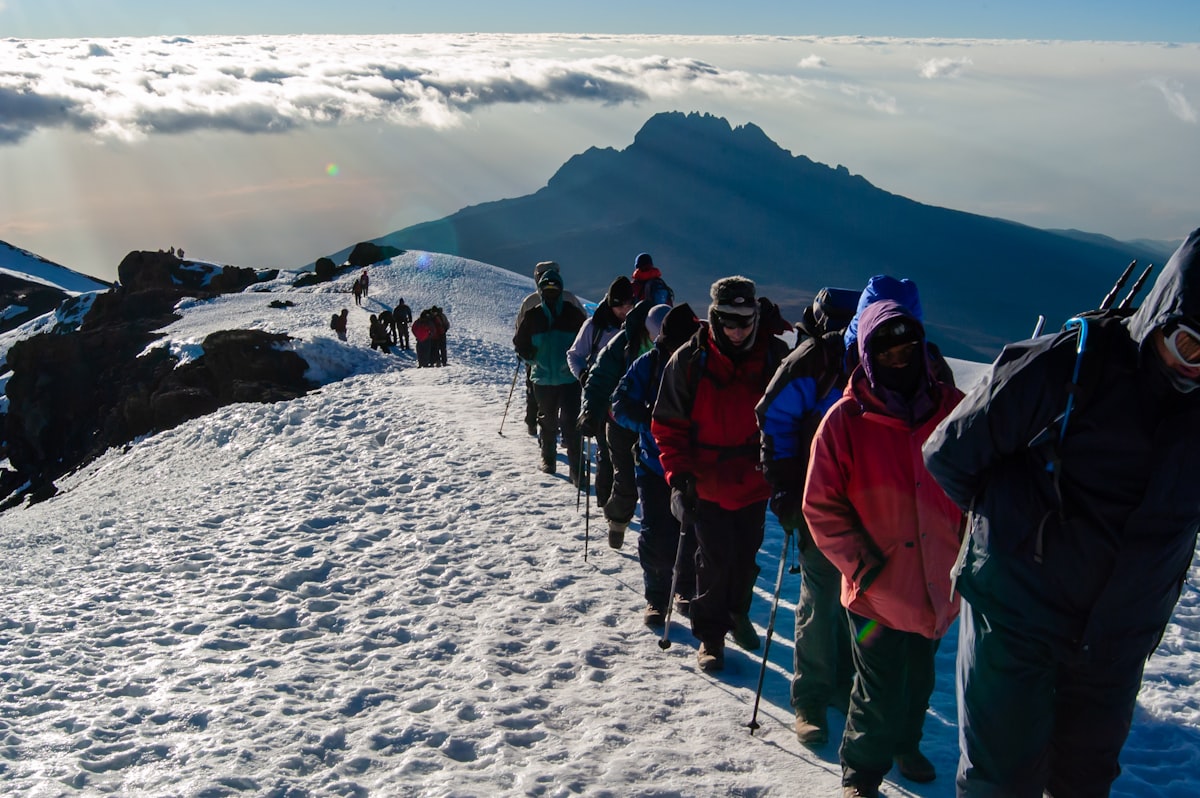
Marangu Route ("Coca-Cola Route"): Too crowded, hut sleeping instead of private tents means less privacy, and the 5-day itinerary has poor acclimatization (only 50-60% success rate). You don't want to spend your honeymoon in bunk beds surrounded by strangers.
Umbwe Route: Way too steep and difficult. It's the hardest route with the most aggressive altitude gain. High stress, low success rate, and it will test your relationship in unpleasant ways (one partner struggling, the other frustrated). Skip it.
Rongai Route: Not terrible, but less scenic than Lemosho or Machame. The northern approach is drier and less varied visually. If you're doing a honeymoon, you want the beautiful route.
| Route | Days | Success Rate | Privacy | Cost (2 people) | Romance Score |
|---|---|---|---|---|---|
| Lemosho | 8 | 85-90% | High | $6,900 private | |
| Northern Circuit | 9 | 90-95% | Very High | $9,200 private | |
| Machame | 7 | 75-85% | Medium | $6,300 private | |
| Marangu | 5 | 50-60% | Low (huts) | Custom quote | |
| Umbwe | 6 | 60-70% | High | $5,900 private |
For an interactive route comparison tool, visit our route comparison page.
This is an easy decision: Do a private climb. Yes, it costs more. No, it's not optional for a honeymoon. Here's why.
Complete privacy — it's YOUR experience. You're on your honeymoon. You want romantic moments, quiet conversations, and intimate experiences with your partner — not small talk with strangers from the UK about Brexit. Private climbs mean it's just you, your partner, and your crew. No other clients. No group drama. Just the two of you.
Set your own pace. No pressure from faster climbers. No guilt about slowing down a group. You and your partner hike at whatever speed feels comfortable, take breaks when you want, linger at scenic viewpoints for photos and kisses, and make the experience yours.
Flexible schedule. Need an extra acclimatization day because one of you is showing altitude symptoms? Your guide can add it. Want to start summit night at midnight instead of 1am? No problem — you're the only clients. This flexibility can be the difference between both summiting and one person having to turn back.
Romantic moments without strangers. Imagine reaching Barranco Camp at sunset, your guide sets up your chairs facing the view, you hold hands and watch the sun sink below the clouds, sharing quiet conversation. Now imagine that same moment with eight strangers nearby talking about their blisters. Privacy transforms the experience.
Guides focus 100% on you both. Your guide isn't splitting attention between 10 people. They're monitoring your health, your pace, your morale. They get to know you as a couple, understand your dynamics, and provide personalized support. This increases safety and success rates.
Let's be transparent about the money:
For many couples, paying $400 total for private dates, pacing, and a dedicated departure is worthwhile on a once-in-a-lifetime honeymoon.
Dedicated guide(s) just for you: Most private climbs for two people include one lead guide plus one assistant guide (2 guides for 2 climbers). This ensures constant monitoring and safety.
Private tents: Obviously you're sharing a sleeping tent with your partner (that's the point!). But your dining tent, toilet tent, and mess tent are private to your climb — not shared with other groups.
Private dining tent: Meals are served to just the two of you in your dining tent. Candlelight dinners at 4,000 meters? Absolutely.
Flexible daily start times: If you want to sleep in an extra hour, you can. If you want to start earlier to catch sunrise from a certain viewpoint, you can. The schedule flexes to you.
Personalized service: Want your guide to take lots of photos of you together? Done. Need someone to carry a surprise gift in their pack for a special moment? Guides are happy to help. This level of personalization doesn't happen in group climbs.
If budget is tight, here's a compromise: Book with another couple you know (four people total) and split the costs.
You get most of the benefits of private climbing with people you already know. KiliPeak's private supplement remains $200 per person, so four travelers pay the same per-person private rate as a couple on the same route.
This works great if you have friends who are also honeymooning or adventurous couples in your circle who want to do this together.
We specialize in honeymoon climbs with romantic touches, champagne at the summit, and personalized service. Let's create your perfect adventure.
Book Your Honeymoon ClimbKilimanjaro might be a wilderness mountain, but that doesn't mean your honeymoon can't include romantic touches. Here's what top operators offer — and what you can DIY — to make your climb special.
Champagne at the summit: Many operators (including KiliPeak) include a complimentary champagne toast at Uhuru Peak. Your guide carries a small bottle in their pack, chilled naturally by the sub-zero temperatures. Popping champagne at 5,895 meters with your partner is unforgettable. (Non-drinkers can request sparkling cider or juice.)
Honeymoon banner for summit photos: Custom banners with "Just Married," your names and wedding date, or "Honeymooning at 5,895m" make summit photos even more special. Operators can print these for you, or you can bring your own (lightweight fabric, rolled up in your duffel bag).
Romantic tent setup at base camps: Some operators arrange special touches: flowers (where available at lower camps), LED candles (battery-powered since real candles are too dangerous), or surprise decorations. Ask your operator what's possible.
Anniversary or special meal: On your final night before descending, some operators arrange a celebratory meal — steak dinner instead of the usual pasta, a cake if possible (bakeries in Moshi can make small cakes that porters carry up), or other special touches to celebrate your achievement.
Professional photo package: Some operators include a dedicated photographer or videographer to document your climb. This is pricey (add $800-1,500) but results in stunning professional photos and video of your honeymoon adventure.
Couples' summit certificate: Most climbers get a standard summit certificate. For honeymoons, operators can create custom certificates with both names and "Honeymoon Summit" notation.
When you book a honeymoon climb with KiliPeak, we include:
These are included at no extra cost for honeymoon bookings. Just mention you're honeymooning when you book.
Planning to propose during the climb? We guide several proposals each year. Here's what you need to know.
Best proposal spots:
Logistics and tips:
Want to add personal romantic elements? Here are ideas you can pack and bring:
Battery-powered LED candles: Real candles are dangerous (fire risk in tents). LED candles create romantic ambiance safely. Place a few in your tent at night for "candlelit" conversations.
Shared music playlist: Download a playlist to your phone (offline/downloaded, no cell service). Bring a small portable speaker or share earbuds. Listening to "your song" at 4,000 meters under the stars hits different.
Surprise love notes: Write notes to each other before the trip and hide them in each other's duffel bags. "Open on summit night," "Read when you're struggling," etc. Discovering these notes on the mountain is incredibly sweet.
Lightweight celebration item: Tiny cake topper from your wedding, printed photos from your engagement, a small meaningful trinket. Something that weighs almost nothing but adds sentimental value.
Vows to read at summit: Some couples write vows to read to each other at Uhuru Peak. If you do this, keep them short (altitude makes it hard to focus) and have a backup plan in case summit weather is too harsh.
The full Kilimanjaro honeymoon experience doesn't end at the summit. The ultimate Tanzania honeymoon combines three elements: the mountain adventure, a luxury safari, and beach relaxation in Zanzibar. Here's how to plan the perfect 2-3 week itinerary.
Days 1-2: Arrival & Pre-Climb Luxury
Fly into Kilimanjaro International Airport (JRO). Transfer to a luxury lodge in Arusha — we recommend Rivertrees Country Inn, Legendary Lodge, or Lake Duluti Lodge. These beautiful properties offer hot tubs, gourmet meals, gardens, and the chance to recover from jetlag in paradise.
Spend one full day resting, adjusting to the time zone, and enjoying romantic dinners and spa treatments. Your guide will visit for a gear check and briefing. Use this day to relax before the adventure begins.
Days 3-10: Kilimanjaro Climb (8-Day Lemosho Route)
This is the heart of your adventure. Eight days on the mountain, summiting Uhuru Peak, then descending. By day 10, you're back at your Arusha lodge, celebrating with hot showers, real beds, and a massage.
Days 11-14: Luxury Safari (4 Days)
After conquering Kilimanjaro, shift gears to wildlife safari. The contrast is perfect — from physical challenge to luxurious relaxation while spotting lions, elephants, and zebras.
Recommended itinerary: Two nights in Serengeti National Park (the endless plains, wildebeest migration if timing is right, predator sightings). One night in Ngorongoro Crater (the world's largest intact volcanic caldera, incredible wildlife density). One night back in Arusha to rest before flying to Zanzibar.
Stay at luxury tented camps: andBeyond Serengeti Under Canvas, Four Seasons Safari Lodge, Singita, or Lemala Camps. These aren't typical camping — think king-sized beds, ensuite bathrooms with hot showers, gourmet meals, and champagne sundowners.
Special honeymoon touches at these camps: Private bush dinners under the stars, couples' spa treatments in your tent, hot air balloon safaris over the Serengeti ($550/person but unforgettable), and personalized game drives focusing on your interests.
Days 15-21: Zanzibar Beach (7 Nights)
Fly from Arusha to Zanzibar (1-hour flight). Spend one day in Stone Town exploring the historic old town (UNESCO World Heritage Site), spice markets, and Arab-influenced architecture. Then transfer to a beach resort on the northeast coast (Nungwi or Paje) or southeast coast (Michamvi or Bwejuu).
Recommended resorts for honeymooners: Zuri Zanzibar (luxury resort with stunning pool, multiple restaurants, and spa), Baraza Resort (ultra-luxury, Moorish-inspired architecture, private plunge pools), Melia Zanzibar (all-inclusive beachfront luxury), or The Residence Zanzibar (intimate, boutique, very romantic).
Activities: Snorkeling or diving (Zanzibar has incredible coral reefs and marine life). Spice tour (learn about Zanzibar's history as the spice capital). Sunset dhow cruise. Prison Island visit (giant tortoises and snorkeling). Or simply: do absolutely nothing. Lie on the beach, read books, get couples' massages, eat fresh seafood, and recover from your adventure.
Day 22: Fly Home
Fly from Zanzibar back to your home country (usually with one connection in Dar es Salaam or Nairobi). Arrive home exhausted, sunburned, happy, and with stories that will last forever.
Let's talk real numbers. Here's what the ultimate Tanzania honeymoon actually costs:
Kilimanjaro Private Climb (8-day Lemosho): $6,900 total for two people
Safari (4 days, luxury tented camps):
Zanzibar (7 nights, luxury resort):
Flights (international roundtrip + domestic):
Pre/Post-Climb Lodges in Arusha: $600-1,200 for two people (3-4 nights total)
Meals, Tips, Extras: $1,000-1,500
GRAND TOTAL (Luxury 3-Week Honeymoon): $12,800-24,000 for two people
Yes, that's expensive. But compare it to other luxury honeymoons: A 2-week European honeymoon easily costs $10,000-15,000. A Maldives resort honeymoon runs $15,000-25,000. This Tanzania adventure is comparable in cost but infinitely more memorable.
Want the Kilimanjaro honeymoon experience but can't swing $20,000? Here's a more affordable version:
TOTAL (Budget 2-Week Honeymoon): $9,500-14,200
Still not cheap, but significantly more accessible while maintaining the core experience: climb, safari, beach.
Only have 10-12 days total? Choose two of the three elements:
Option A: Climb + Zanzibar (Skip Safari)
8-day climb + 3-4 days Zanzibar. Total: 11-12 days. You get the adventure and the relaxation, skip the safari. Cost: $8,000-12,000.
Option B: Climb + Safari (Skip Beach)
8-day climb + 3-4 day safari. Total: 11-12 days. Pure adventure, no beach time. Best for couples who aren't beach people. Cost: $9,000-14,000.
Option C: Climb Only + Luxury Lodges Before/After
8-day climb bookended by 2 nights in luxury lodges. Total: 12 days. Affordable, focused on the mountain, includes some pampering. Cost: $7,000-10,000.
Planning a multi-element honeymoon is complex. KiliPeak offers combo packages that coordinate everything for you:
The benefit: You don't coordinate between three different companies. We handle it all, ensuring seamless transitions and no logistical headaches on your honeymoon.
Planning Tip: Book your Kilimanjaro climb first (6-9 months ahead), then build your safari and Zanzibar around those dates. Climb dates fill up early, especially during peak season. Safari and beach have more flexibility.
Let's get brutally honest. A Kilimanjaro honeymoon is amazing, but it's not a romance movie. There are challenging, uncomfortable, and decidedly unromantic moments. Here's what you actually need to know.
Spectacular sunsets together: Watching the sun sink below the cloud line from Barranco Camp or Lava Tower, sitting close for warmth, sharing quiet conversation — these moments are profoundly beautiful.
Stargazing from 4,000+ meters: The Milky Way at altitude is something most people never experience. No light pollution, thin atmosphere, crystal-clear skies. You'll see more stars than you knew existed, lying in your sleeping bags pointing out constellations.
Supporting each other through challenges: When your partner is struggling and you help them keep going, you learn what partnership really means. When they do the same for you, you feel deeply cared for. This kind of mutual support strengthens your relationship foundation.
Summit sunrise — ultimate shared achievement: Reaching Uhuru Peak at dawn, watching the sun rise over the African plains 6,000 meters below, holding hands and crying because you DID IT together — this is what Kilimanjaro honeymoons are about. The triumph is amplified because you shared it.
Quiet mornings with coffee overlooking clouds: Waking up in your tent, unzipping the door to see the camp above the clouds, sipping hot coffee together while watching the mountain wake up. Simple, intimate, perfect.
Team effort creates deep bonding: By day three, you're a unit. You know each other's hiking pace, energy levels, needs. You operate as a team in a way that normal life rarely demands. This bonding is accelerated and profound.
Altitude sickness doesn't care it's your honeymoon: Headaches, nausea, dizziness, shortness of breath — these are common and affect people randomly. You might feel terrible on the day you most wanted to enjoy together. Your partner might vomit at Lava Tower. Altitude is harsh and indiscriminate.
Sleeping in tents (cold nights, basic facilities): Even with good sleeping bags, nights are cold. You're sleeping on the ground (with a sleeping pad, but still). You hear every sound outside. Some people sleep great; others barely sleep at all.
Limited privacy at campsites: Even on private climbs, you're at established campsites where other groups might be nearby. You'll hear other climbers, see other tents, and share the general space (though your crew and tents are private).
Toilet situation: Public campsites have squat toilets — basically a hole in the ground. Private climbs often include a private "toilet tent" (portable toilet seat in a tent, emptied by crew) — better, but still basic. There's no delicate way to handle bathroom logistics at altitude. You'll see each other at your most unglamorous.
No showers for 7-9 days: You will be dirty. Wet wipes become your shower. You'll smell. Your partner will smell. By day five, you stop noticing. Pack dry shampoo, wet wipes, and a sense of humor.
You'll see each other at your worst: Exhausted, dirty, possibly throwing up from altitude, emotionally fragile, maybe crying from exhaustion. There's no hiding or maintaining appearances. This vulnerability can be beautiful, but it's also intense.
Summit night: 1 AM wake-up, 7+ hours in cold and darkness: Summit night is brutal. You wake up when you'd normally be in deep sleep, put on every layer you own, and hike for 7-8 hours in freezing temperatures (often -10°C to -20°C at the summit) in the dark. You're exhausted, cold, nauseous from altitude, and questioning every life choice. It's hard. Really hard.
Seeing your partner push through challenges = deep respect: When you watch your partner suffer through summit night and refuse to quit, you see their strength and determination. That's attractive and inspiring in a way that normal honeymoons can't replicate.
Overcoming hardship together = stronger marriage foundation: Marriage isn't easy. Starting yours by proving you can face extreme challenges together is powerful. You build confidence: "If we can summit Kilimanjaro, we can handle anything."
You'll laugh about the tough parts later: "Remember when you threw up at Lava Tower and I had to hold your hair while wearing gloves?" becomes a funny story you retell for years. Shared suffering creates inside jokes and bonding.
The triumph of summiting together eclipses all discomfort: When you reach Uhuru Peak and realize you both made it, all the cold, nausea, exhaustion, and discomfort melts away. The achievement is so powerful that the hardship becomes just context for the victory.
Stories last a lifetime: You'll tell your Kilimanjaro honeymoon story forever. At parties, to your kids, to other couples. It becomes part of your identity as adventurers who started their marriage with something extraordinary.
The key to a successful Kilimanjaro honeymoon is honest communication beforehand:
Sarah and Mike (mentioned earlier) climbed Lemosho for their honeymoon in July 2025. Here's their honest account:
"We got married in June and flew to Tanzania three weeks later. Both of us were fit — we hike regularly in Colorado. We trained together for four months. Day 1-3 on Kilimanjaro were amazing. Beautiful scenery, bonding time, feeling strong. Day 4 at Barranco Camp (3,960m), Sarah developed severe altitude headache and nausea. She threw up multiple times that night. Mike stayed up with her, held her, gave her water, and asked if she wanted to descend."
"Sarah almost quit. She felt like she was ruining our honeymoon. But Mike refused to let her think that way. He said, 'This IS our honeymoon. Us, together, facing this challenge. I don't care if we summit. I care that you're okay.' That support got her through the night."
"She felt better by morning (altitude symptoms are weird like that). We continued, slower pace. Both summited on day 7. Standing at Uhuru Peak together, Sarah says she wasn't thinking about the summit — she was thinking about Mike's support at Barranco Camp. That's what defined our marriage. We learned we can face anything together."
This is the reality: Kilimanjaro honeymoons test you. If you approach them as a team, they make you stronger. If you approach them with unrealistic expectations or without genuine partnership, they can create friction. Choose wisely.
One of the unexpected benefits of a Kilimanjaro honeymoon is the training process. For 3-4 months before your climb, you'll train together — hiking, cardio, strength work. This pre-honeymoon bonding is valuable and fun if you approach it right.
Weekend hikes = date days: Instead of brunch or movies, your dates become hiking adventures. Explore new trails, pack a picnic, make it fun. You're building fitness while spending quality time together.
Gym sessions together: Accountability and time together. One person lifts weights while the other does cardio, then you switch. You motivate each other and prevent the "I'll skip today" temptation.
Training for a shared goal = pre-marriage bonding: You're working toward something together before you even say "I do." This builds teamwork skills and excitement.
Progress tracking together: Celebrate milestones. "We just hiked 8 miles with 2,000ft elevation gain!" Reward yourselves with a nice dinner or movie night. Positive reinforcement makes training enjoyable.
Here's a simplified training outline. For a detailed plan, see our full 12-week Kilimanjaro training guide.
Month 1: Build Cardio Base
Month 2: Add Weighted Backpack Hikes
Month 3: Longer Hikes, Increase Intensity
Month 4: Taper and Final Prep
If one partner is significantly fitter: The slower partner sets the training pace. The fitter partner can do supplemental training alone, but couple workouts should match the slower person's ability. No pressure, no frustration — you're building up together.
Build up together, don't let fitness gaps create stress: If one person is struggling to keep up during training hikes, that's okay. Slow down, take breaks, adjust expectations. The mountain pace is slow anyway ("pole pole" means slowly slowly in Swahili). You don't need to be fast; you need to be steady.
Celebrate each other's progress: Notice when your partner completes a hike they couldn't do a month ago. Acknowledge improvements. Positive reinforcement beats criticism every time.
Train separately sometimes if paces differ significantly: It's okay if the fitter partner does solo runs or gym sessions. You don't need to do EVERY workout together. Just make sure you do 2-3 workouts together per week to maintain the couple bonding aspect.
Saturday morning hikes + brunch after: Wake up early, hit the trail for 3-4 hours, then reward yourselves with a big brunch and coffee. This becomes your weekly ritual.
Sunrise summit training hikes: Practice early morning starts (summit night on Kilimanjaro starts around midnight). Do a pre-dawn hike to catch sunrise from a peak. This tests your ability to wake up early, hike in the dark with headlamps, and function when you're groggy.
Camping trips: Practice sleeping in a tent together. Test gear, get comfortable with camping logistics, and see how you both sleep outdoors. If one person snores or hogs the sleeping bag, you'll discover it now instead of on Kilimanjaro.
Stair climbing sessions: Find a stadium, tall building, or outdoor staircase. Climb stairs together for 30-60 minutes. It's functional training for uphill endurance, and you can chat while you climb.
Let's talk money. A Kilimanjaro honeymoon isn't cheap, but with smart planning, you can make it work for a range of budgets. Here's what you actually need to budget for.
Climb-Only Honeymoon (10-12 Days Total)
TOTAL: $10,700-14,300
Full Honeymoon (Climb + Safari + Zanzibar, 3 Weeks)
See cost breakdown in the "Combining Climb with Safari & Zanzibar" section above.
Private climb: KiliPeak's private supplement is $200 per person, or $400 total for a couple. Choose it when private dates and pacing matter to your honeymoon.
Longer route: KiliPeak's private 8-day Lemosho climb costs $300 more per person than private 7-day Machame and gives your itinerary one more acclimatization day.
Post-climb luxury: After 8 days of basic camping, you'll CRAVE comfort. Spending on a luxury safari camp or nice Zanzibar resort post-climb is incredibly rewarding. Your body and mind need the pampering.
Gear rental vs. buying: If you won't use the gear again, rent it. Most operators rent sleeping bags, trekking poles, and other equipment for $100-200 total. Buying all new gear costs $500-1,200.
Mid-range safari instead of ultra-luxury: You don't need $1,000/night camps to have an incredible safari. Mid-range tented camps ($200-350/night) offer the full safari experience without the ultra-luxury price tag.
Shorter Zanzibar stay: Five nights on the beach instead of seven saves $400-1,000 and still gives you plenty of relaxation time.
Book 6-12 months in advance: Flights and lodges are cheaper the earlier you book. Last-minute bookings can cost 30-50% more.
Modern couples increasingly use "adventure registries" instead of traditional wedding registries. Friends and family contribute toward experiences instead of buying you a toaster.
Platforms like Honeyfund, Zola, and Wanderable let you create a registry where guests contribute to your Kilimanjaro honeymoon. Examples:
Guests choose what to contribute toward. It's a win-win: they give you something you actually want, and you get help funding your dream honeymoon.
Let's compare Kilimanjaro honeymoon costs to typical alternatives:
The Kilimanjaro honeymoon is comparable in cost to other luxury honeymoons. The difference? This one is truly unique and transformative. Ten years from now, you'll barely remember the resort buffet in Mexico. You'll vividly remember summiting Kilimanjaro with your partner.
For detailed cost breakdowns and budgeting tools, read our complete Kilimanjaro cost guide.
At KiliPeak, we've guided over 100 honeymooning couples up Kilimanjaro. We understand what makes honeymoon climbs special — and what couples need to succeed and create lifelong memories. Here's why couples choose us.
Private climbs as standard (no forced group joins): Every honeymoon climb we run is private. Just you, your partner, and your dedicated crew. No strangers, no group compromises.
Honeymoon-focused service: We include romantic touches at no extra cost: summit champagne, custom honeymoon banners, special celebration meals, and personalized service. We treat your honeymoon as the special occasion it is.
Ahmed's 20+ years of experience: Our lead guide Ahmed has been guiding on Kilimanjaro since 2003. He's guided dozens of honeymoon couples and understands couple dynamics — when to give you space, when to offer encouragement, and how to help both partners succeed.
Small crew, intimate experience: We're not a big commercial operation running 10 groups simultaneously. We focus on quality, personal service, and creating the experience you deserve.
92% honeymoon couples' success rate: Of the honeymoon couples we've guided in the past three years, 92% had both partners summit. We achieve this through careful route selection (we recommend longer routes for honeymoons), attentive guiding, and flexible pacing.
Combo coordination (safari and Zanzibar): We partner with trusted safari operators and Zanzibar resorts to create seamless multi-element honeymoons. One booking, one point of contact, coordinated logistics. You focus on each other; we handle everything else.
When you book a honeymoon climb with KiliPeak, here's what you get:
On the Mountain:
Honeymoon-Specific Extras (Included):
Pre/Post Climb:
8-Day Lemosho Private Climb for 2 People: $6,900 total.
This price includes everything listed above. The only additional costs are:
Optional Add-Ons:
Step 1: Contact Us
Email info@kilipeak.com or use our contact form. Mention you're planning a honeymoon! Tell us your preferred dates, route interest, and any special requests.
Step 2: Custom Itinerary
We'll create a custom itinerary based on your preferences, timeline, and budget. Want to add safari? Zanzibar? Extra rest days? We'll design it for you.
Step 3: Flexible Payment
A 25% deposit per person secures your dates. The remaining 75% is due 60 days before departure.
Step 4: Pre-Departure Support
We provide packing lists, training advice, and answers to all your questions as you prepare. We're with you from booking through summit celebration.
Book 6-9 Months Ahead for Best Dates: Peak season (June-October, January-March) books early. If you have specific dates tied to your wedding, book as soon as you set your wedding date.
"We researched 10+ operators. KiliPeak stood out because they actually specialize in honeymoons. The romantic touches, the small crew, the personalized service — it all mattered." — Emma & David, UK
"Ahmed and his team made our honeymoon perfect. When I struggled with altitude at Barranco, they adjusted our pace and gave me extra time to recover. Both of us summited, and we credit KiliPeak's attentive guiding." — Sarah & Mike, USA
"The summit champagne, the honeymoon banner, the special dinner — these touches made our climb feel like a honeymoon, not just a trek. Worth every penny." — Lisa & Tom, Australia
Book your private Kilimanjaro honeymoon with KiliPeak — champagne toast included, unforgettable memories guaranteed.
Plan Your Honeymoon Climb